Private Equity Bought Your Competitor and Gave Them a Tech Stack
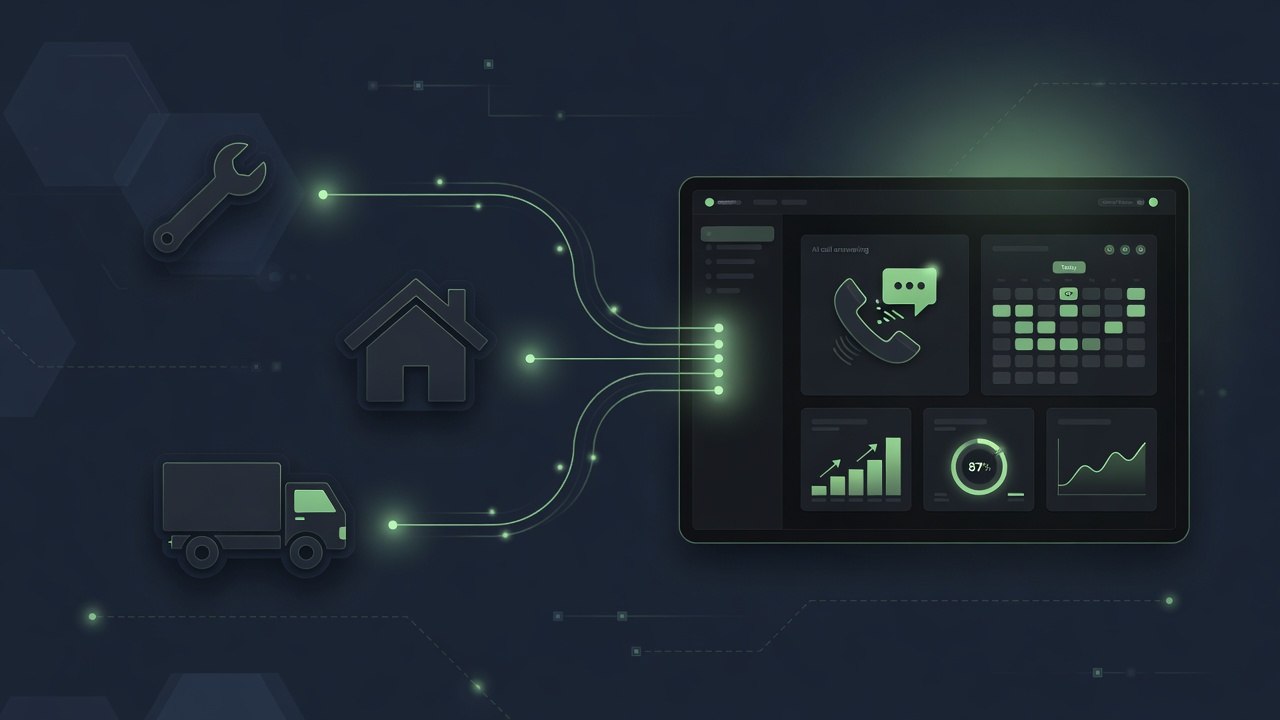
You’ve seen it happen. A competitor you’ve known for years suddenly has new trucks, a new logo, and a phone line that picks up on the first ring at 9pm on a Sunday. They didn’t get smarter. They got bought.
Private equity has been rolling up the trades for a few years now. Plumbing, HVAC, electrical, pest control, garage doors. A fund buys a dozen local companies, puts them under one brand or one platform, and plugs every one of them into the same back office. Same call center. Same software. Same marketing engine.
The International Franchise Association’s 2026 economic outlook says private equity investment in franchising picked up through late 2025 and will keep accelerating this year, and that the capital is chasing brands with strong technology infrastructure. Residential and commercial services sit near the top of its fastest-growing categories. Translation: the money has noticed the trades, and what it’s mostly funding is software.
So here’s the question that matters if you’re still independent. What did your competitor actually get when they sold? And how much of it can you get without selling?
More than you’d think. Most of it, actually.
What the roll-ups actually have
Strip away the branding and the platform advantage comes down to four things.
Every call gets answered. Not most calls. Every call, around the clock, usually by an AI agent backed by a call center. ServiceTitan published a case study where one HVAC company’s AI agent booked over 90% of inbound calls and handled 72% of them with no human involved at all. Those are vendor numbers, so apply the usual discount. But even discounted, the shape is clear. The platform companies never miss a call, and a missed call in home services is a lost job, because the customer just dials the next name on the list.
Booking happens on the spot. The customer doesn’t leave a voicemail and wait. They pick a time slot while they’re still on the phone, or on the website, and get a confirmation text before they’ve put their phone down. The job is on a technician’s schedule before you would have checked your voicemail.
Follow-up runs on rails. Review request after every completed job. Maintenance reminder at the right interval. Reactivation message when a customer goes quiet. Nobody at the platform company remembers to do this. Nothing depends on remembering. It just fires.
They know their numbers. Cost per lead, booking rate, average ticket, revenue per truck, all on a dashboard somebody actually looks at. When they raise prices or cut a marketing channel, it’s because the numbers said to.
That’s it. That’s the machine. Notice what’s not on the list: better technicians, better work, better reputation in your town. The platform doesn’t win because it’s better at the trade. It wins because it’s consistent. It answers the 2am call the same way it answers the 2pm call, asks for every review, sends every reminder. Consistency at scale is the entire advantage.
The part that should annoy you
Here’s the thing about that shared technology infrastructure the IFA report keeps pointing to. None of it is exotic.
An AI agent that answers calls is a subscription. Online booking is a subscription. Automated review requests, maintenance reminders, a dashboard that shows where your leads came from. Subscriptions, all of them, sold openly to anyone with a credit card. The private equity firm didn’t invent any of this. They just standardized it across forty companies at once and called it a platform.
The roll-up’s real innovation was deciding that this stuff was mandatory instead of optional. Every business they buy gets the stack on day one, whether the previous owner believed in it or not. Independents have access to the same tools. Most just haven’t been forced to adopt them, so they haven’t.
That’s the gap. Not capital. Adoption.
The 80% version, for a few hundred a month
You can’t match the platform’s call center headcount or its ad budget. You don’t need to. You need to match the part of the machine that actually wins jobs, and that part is small.
Answer every call. An AI answering service or, at minimum, automatic text-back on missed calls. When you’re under a sink and the phone rings, the caller gets a text within seconds asking what they need and offering to get them scheduled. This is the single most important piece, because speed of response is where independents bleed the most jobs to the platforms.
Let people book without calling. A booking link on your website and in your text replies. Some customers will always want to talk. A growing number would rather pick a slot at 11pm without speaking to anyone, and right now those people are booking with your acquired competitor.
Put follow-up on autopilot. Review request when the job is marked paid. Maintenance reminder at whatever interval your trade runs on. A reactivation message for customers you haven’t seen in a year. Write each message once, set the trigger, done.
Count three things. Calls received, jobs booked, where each lead came from. You don’t need the platform’s dashboard. You need enough visibility to know whether the machine is working and which marketing is paying for itself.
All in, that’s a few hundred dollars a month and a setup project measured in weeks, not a transformation measured in years. It won’t give you 100% of what the roll-up has. It gives you the 80% that determines who gets the call, for less than the cost of one lost job a month.
What they can’t buy
Now the honest other half. You keep things the platform can’t replicate, and they matter.
When you answer, the customer gets the person whose name is on the truck. You know the house, the system you installed, the weird shutoff valve in the crawlspace. Your reputation took twenty years to build and it’s attached to you, not to a brand that didn’t exist in your town three years ago. The technician the platform sends is on his third employer logo in four years. You’re still you.
You also have no fund to answer to. No growth target that forces upsells on every visit, no pressure to hit a number this quarter. You can do right by a customer at the expense of a ticket, and that choice compounds in a small market.
But all of that only matters if people can reach you. Trust doesn’t win the job if the customer never gets through. The platforms aren’t betting that they’re better than you. They’re betting that speed and consistency beat relationships, because the customer with a flooding basement calls whoever answers.
The actual question
If a roll-up moves into your market, you have three options. Sell, compete, or slowly lose share while telling yourself your work speaks for itself.
Selling is a legitimate choice and for some owners it’s the right one. That’s a different post. But if you’re staying independent, the move isn’t to out-spend the platform. You can’t, and you don’t have to. The only part of their advantage that decides who gets the call is the part you can rent.
The question isn’t whether you can compete with private equity. It’s whether you’re going to keep losing jobs to a software stack you could have for a few hundred dollars a month.
Have a project in mind? We'd love to hear about it.
Start a conversationRelated posts
Build an AI Review-Triage Workflow That Saves You Two Hours a Week
A step-by-step setup for pulling reviews from every platform into one daily summary with sentiment flags and draft responses ready for your edit.
Where Leads Actually Disappear in a Small Business
A walkthrough of the five places small businesses lose leads between form fill and booked job, and what to do about each one.
The AI Automations That Actually Earn Their Keep in a Small Business
A practical list of the AI automations that pay back the setup time for a small business, the ones that are oversold, and where to start.